By Mabi Azefor Fominyen
Back at the university, my Journalism and Mass Communication lecturers taught me the radio was one of the most accessible, affordable , available and effective medium of communication in most parts of the world. I can attest to this, haven been on the field for many years now. In fact the radio is an effective means of mass communication. Many researchers have also confirmed this.
Unfortunately not every community/individual especially those in some remote parts of my country do have access to information broadcast on radio in spite of the multitude of radio stations now existing in Cameroon.
"Cameroonian Village gets connected" written by Rachel Stevenson is a piece worth reading .Below is the success story of a community radio station in the remote village of Donga-Mantung-Nkambe, North West of Cameroon.What am impact !
Cameroonian village gets connectedRachel Stevensonguardian.co. uk, Tuesday 20 January 2009 00.05 GMT
Link to this video"I felt like I lived in a hole until the radio came," Fai, a farmer in Donga-Mantung, north-west
Cameroon, clasps a small, old radio in his hands as if it were a block of precious metal. Its dial is fixed at one frequency – only one station gets a reception in this area and it is a beam of light for a community otherwise in darkness.
Donga-Mantung is poor, rural and remote. The main industry is subsistence farming and less than half the population has had formal schooling. The dirt roads are often impassable and villages have no electricity, no phone lines, no television reception and, until 2006, not even a radio signal.
Feeling cut off from the world and concerned about the spread of HIV, the local council began the Donga-Mantung Community Radio (DMCR) in 2006 to bring information and social improvements to its population. For Fai and his fellow villagers, DMCR is invaluable. "Before the radio started, I didn't even feel I was a Cameroonian because I didn't know anything about what was happening in my country," he says. "Now we get the national news, we get local news, we hear about jobs, we get health programmes – it really has brought a lot of progress to us here."
DMCR reaches more than 600,000 people and has a packed schedule of news, health, education, social affairs, cultural and music programmes. It broadcasts in local dialects, as well as English, to reach as wide an audience as possible. Details of vaccination programmes, free treatment centres and employment opportunities are announced over the airwaves, as well as more humdrum items such as births, deaths, council notices, and lost property. It hosts a hip-hop show for budding DJs and has just started a programme covering women's issues - "The people's radio, your radio, our radio", as the station's jingle goes.
"For as little as a £1,000, you can set up a station that reaches people up to 25 miles away in every direction," says Max Graef, a sound engineer and the founder of
RadioActive, a London-based social enterprise that built DMCR on behalf of the council. "In places where there are no roads, no electricity, no phones and low literacy rates, radio is the cheapest and easiest way to reach people."
RadioActive has built radio stations in neglected communities all over the world from Palestine to Madagascar, Honduras to Nepal. "Anyone who can speak can be on the radio, so virtually everyone in the community can take part," Graef says. "The technology is not as expensive as people think and even people with hardly any money will get their hands on a radio so they can hear what is happening in the world around them. A radio station provides a focal point for community participation and engagement, as well as a platform for dialogue and debate."
DMCR and RadioActive' s busy order book are examples of the growing use of radio to empower economically and socially marginalised groups. Last year marked the 25th anniversary of the
World Association of Community Broadcasters, which now has more than 4,000 members in 115 countries, all working at a local level to make an impact on poverty, exclusion, social justice and human rights.
Assisting the growth is the spread of technology, which is making information more accessible in the developing world.
"We are seeing greater recognition of the power of media as a tool for development, " says Stephen King, director of the
BBC World Service Trust, the charitable arm of the world-renowned station. "There has been a sea-change in technology – take the explosion of mobile phone use in Africa as an example. People now have a much better understanding of media and communication. "
The trust works with non-governmental organisations and broadcasters on a range of media projects, from post-conflict communities like Sierra Leone, to promoting transparency in government in Nigeria, to training reporters to cover war crimes tribunals, to improving women's rights in Afghanistan.
It is also seeing a growing demand for media to become part of the emergency response to disasters. In the aftermath of Cyclone Nargis in Burma last year, the trust worked with aid agencies to send out information on basic sanitation and where to access aid over the radio.
Radio is being put to a substantial range of uses and it seems more and more communities want their voices heard.
In Donga-Mantung, the success of DMCR has kick-started an insatiable desire for media in the area. The Lord Mayor of Nkambe, the town where the radio station is based, says neighbouring regions are now trying to do the same. "I think within a short time we will have more community radio stations all over this area," he says. "And I tell you, it is the greatest tool of education and information we could have for our people."


 People from diverse backgrounds turned out to celebrate and enjoy the evening.
 Clad in different costumes and traditional regalia Parents, teachers and students showed up to be a part of the event and all celebrated in style and colours.

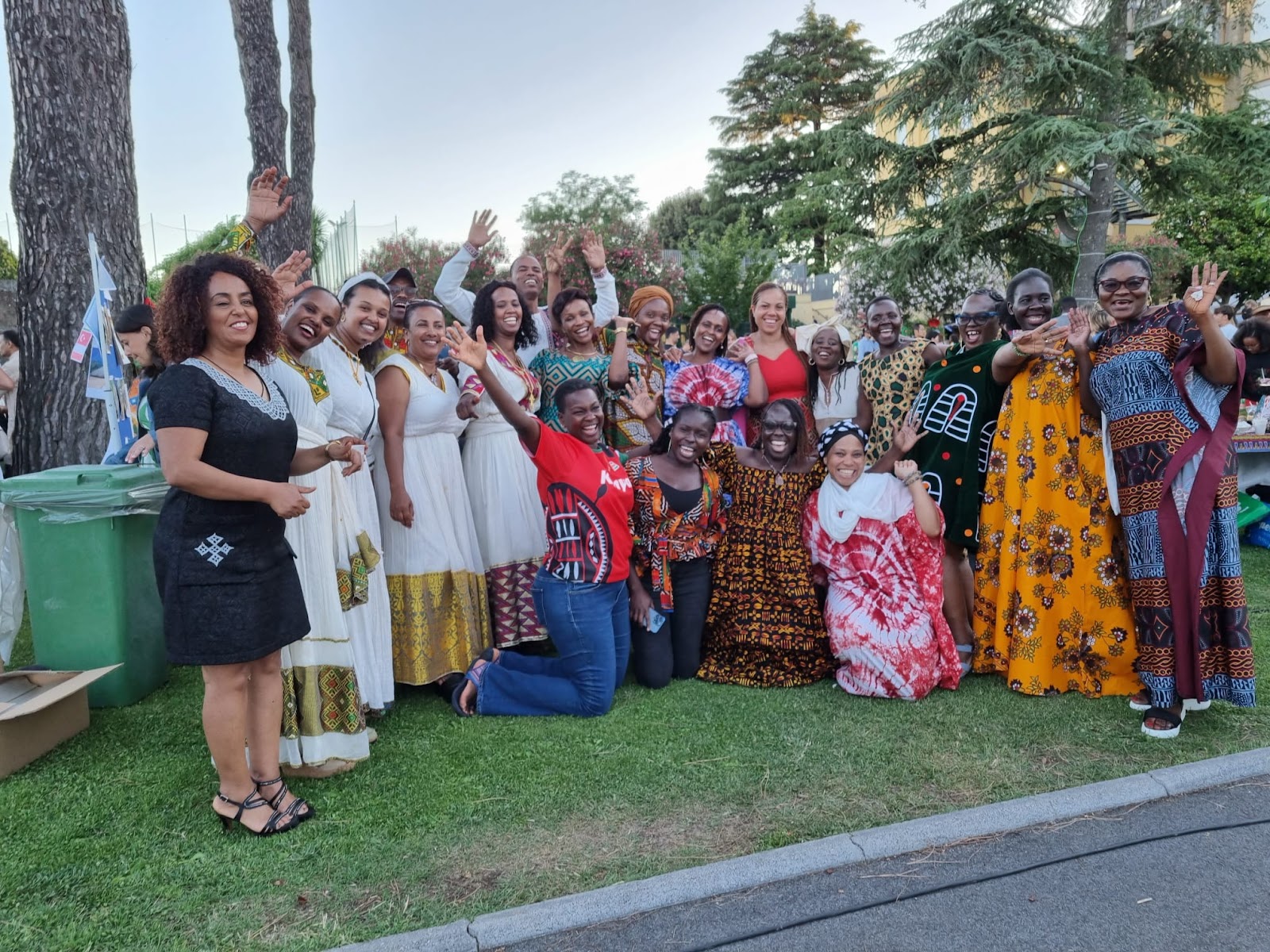
 Thanks to the community, the entire LS- PSG team especially The PSG -LS Chair , Co-Chair, the logistics , maintenance and finance teams and all Volunteers; for the great teamwork and tremendous effort we all put in, 👏 towards ensuring a successful 2024 International Evening at St George's. #Teamwork made the dream work !


